Five hands everyone plays wrong.
The casino's edge isn't mostly the rules. It's five decisions, made wrong at nearly every table, every night, and one placard that reads 6:5. Here's the math, then the drill.
- EVs computed, not copied
- Rule-accurate engine
- Cancel any time
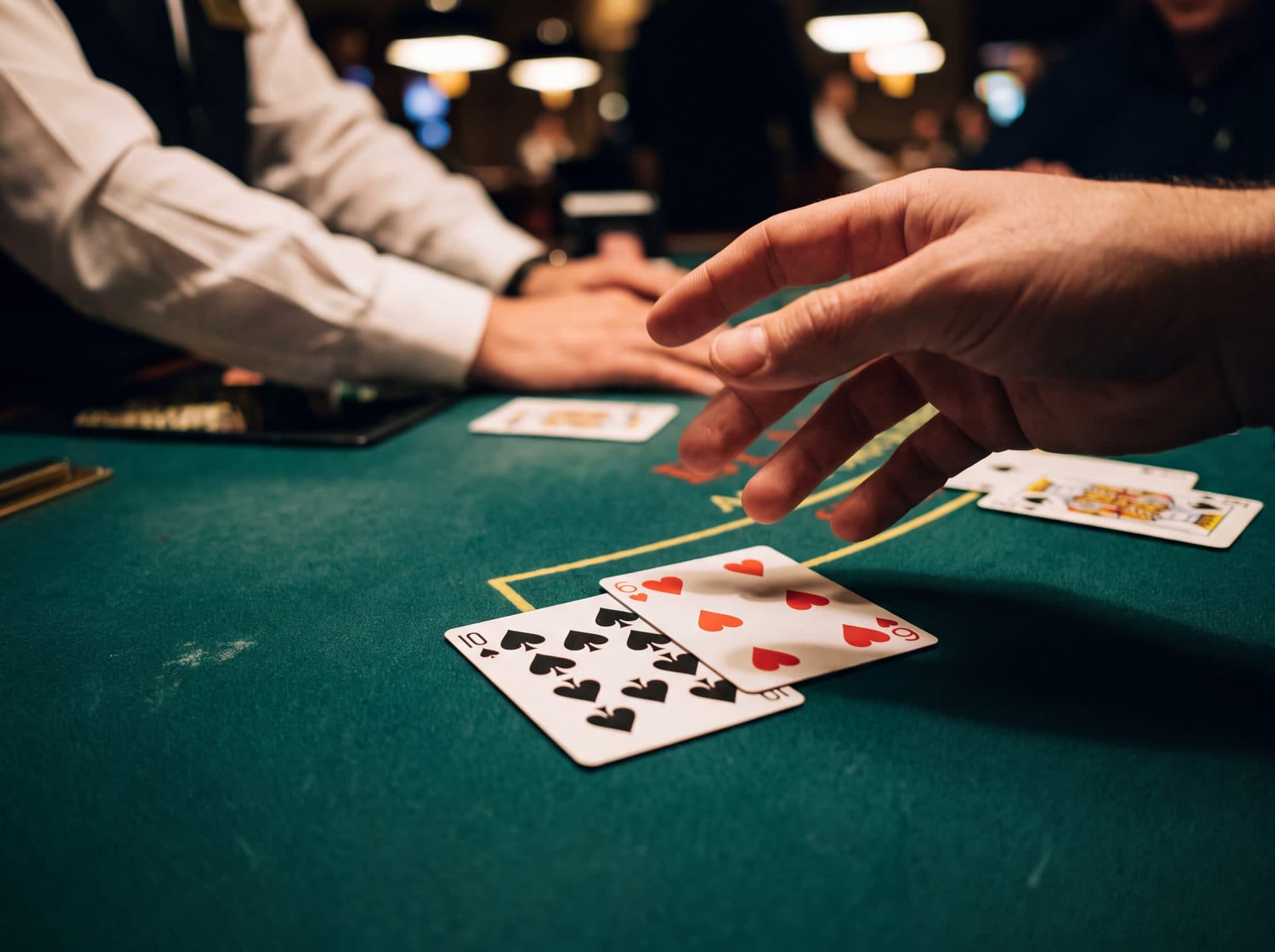


You have 16. Dealer shows a 10.
Hit.
Surrender if the table allows it.
This is what Count21 tells you, on every hand, until you no longer need it.
The hands
16 vs 10
- Common:
- Stand, "I'll bust"
- Correct:
- Hit (surrender if offered)
Hitting −0.540, standing −0.540, surrender −0.500. Nearly a tie, and the tie breaks toward hitting.
Soft 17 vs 6
- Common:
- Stand, "it's a 17"
- Correct:
- Double
Doubling is worth about 0.25 of your bet more than standing. A soft hand can't bust on one card and a 6 is the dealer's weakest upcard.
8,8 vs 10
- Common:
- Hit, "don't put more money on a loser"
- Correct:
- Split
A hard 16 is the worst total in the game. Two hands starting on 8 are better in expected value, even against a ten.
Insurance
- Common:
- Take it, "protect the blackjack"
- Correct:
- Decline
2:1 on a 30.8% chance. The one exception is a high true count, which is a counting decision, not a hunch.
The 6:5 table
- Common:
- Sit at the first open seat
- Correct:
- Walk
+1.39% on the house edge, more than every other rule variation put together.
The math
| Hand | Play | Expected value |
|---|---|---|
| 16 vs 10 | Hit | −0.540 |
| 16 vs 10 | Stand | −0.540 |
| 16 vs 10 | Surrender | −0.500 |
| Soft 17 vs 6 | Double | +0.249 |
| Soft 17 vs 6 | Stand | −0.006 |
Per unit bet, computed by the Count21 engine for a six-deck game where the dealer hits soft 17.
Why these five
Casino observation studies put the average player's mistakes at roughly one hand in eight, giving back about 0.8% of every dollar wagered on top of the house edge the rules already provide. That's the difference between a 0.5% game and a 1.3% game. These five hands are where to start.
Source: Zender, B. (2009). Player Error Factors in Blackjack. Casino Enterprise Management, April 2009.
“I thought my Hi-Lo count was fine until the trainer showed me where I was drifting. A week of twenty minutes a day and it stuck.”
“Two weeks of practice before Vegas. I knew what to do with every hand, and the dealer never had to prompt me. That was the whole point.”
Four of them, right here.
16 vs 10, a pair of eights, 11 vs 6, 12 vs 2. Inside, the drill queues every hand you miss and brings it back until you stop missing it.
Cheaper than one bad session.
Everything above, every counting system, unlimited hands. Yearly is pre-selected because that's how long it takes to get genuinely good.
Yearly
Best value$99 a year
$8.25 a month · Renews yearly. Cancel any time.
Monthly
$12.99 a month
Renews monthly. Cancel any time.
Both plans include
- Unlimited daily practice hands
- All 6 card counting systems
- Real-time coaching & feedback
- Full game history & statistics
- Achievements & leaderboards
- Strategy accuracy tracking
Secure checkout with Stripe. Subscriptions renew automatically at the same price until you cancel. Cancel any time from your account; access continues to the end of the period you paid for.
Questions
Where do these numbers come from?
The Count21 engine computes the expected value of every legal action for your exact rules: deck count, soft-17 rule, double after split, surrender. The figures on this page are for a six-deck game where the dealer hits soft 17. Change the rules in the trainer and the numbers change with them.
Is 16 vs 10 really a tie?
Close enough that the argument at the table will never end. Hit edges it. Surrender, where offered, beats both.
Isn't doubling a 17 reckless?
A soft 17 can't bust on one card. Against a 6, the dealer busts more than against any other upcard. It's the opposite of reckless; it's the most under-played positive-EV double in the game.
What about the other mistakes?
There are more, and the drill covers all of them. These five are the ones that cost the most, most often.